Thursday, March 4, 2010

Is that so? Juxtaposing Images

In our recent stay in Buenos Aires, I was struck by a few images.

When you put two random images together, side by side, they seem to take on a singular form, as if the juxtaposition creates the effect.


Is that so?


So be it.


This is a phrase I identify with living Zen:

Is that so?

I got this from a koan about a priest who is accused by a young woman of getting her pregnant.

When her parents confront him with what they think he did, he doesn’t deny it or admit it. He says, Is that so?

He loses his reputation, everybody despises him, c alls him a pervert, spits on him, and years later, after living in the streets as a beggar, the girl confesses that it wasn’t the priest, but a boy she was in love with.

The people come to the priest to tell him that they are sorry for treating him so badly. They tell him that they found out the truth.

Is that so? he asks.

The point of this koan --(or one of the points, because there are as many points to a story as there are people to read them)-- is the idea that if one wants to move toward enlightenment, one must receive all things as equal, praise as well as disdain.

This idea of everything being equal can take on many meanings, depending on the perspective. It can mean, for example, to trust God (the universe, life, goodness, or any of the other seventy plus names for the ein sof).

I find “Is that so?” to be similar in many ways to the Judeo Christian tradition of saying “Amen,” which means, So be it.


Is that so?


So be it.


This is the only organizing principle for these juxtapositions.


Is that so?

So be it.


I put them together careful not to make a statement or try to express a meaning.


Obviously I will make unconscious cultural and intellectual choices when I juxtapose any two images, but I’m not trying to say anything. Also obvious is that I will make choices based on symmetry, color, lighting, etc.

Perhaps that is more of a factor in how images choose each other.

A few times, when I tried to put an image with another, it resisted, until I found its partner.

But the meaning is in the juxtaposition itself, and the connections a viewer makes will be their creation, their statement on reality.

The meaning is in the thing itself.


Is that so?


So be it.


##################################################################


Is that so?


So be it.


######################################################################


Tuesday, February 9, 2010

writer's block intersection

Before I get to part two of the Writer's Block, let me say....

This is what we see from our balconies and sidewalks.


And this.


This is the Escher House.


On the Writer's Block there are at least five serious writers.


These are three writers.


One of them lives on the Writer's block.


Speaking of the Writer's Block, part two anyone?

Friday, January 29, 2010

The Writer's Block

Part One of Two Parts


Kafka has his own social life.

He’ll sit at the door to the balcony and stare at us, until one of us lets him out.


We have a wrap-around balcony right above an intersection in Sunset Heights. It has 180 degree view, views of the mountains, rooftops, and on the other side we can see a sea of lights that is Ciudad Juárez.


We are practically underneath the El Paso Star, the city’s postcard identity, a lit up Texas star on the side of the biggest mountain.


Kafka’ll sit on the corner of the balcony looking down on the intersection. Directly across from us is a three-story mansion now converted into many rooms, un-air conditioned apartments where poor people live, mostly older women without families.
He stares off at that house or onto the intersection at people walking by, homeless guys looking for spare change, college students parking in front of our building and running late to class. He doesn’t bark at anyone, he hardly ever barks, but occasionally one of the old women coming out of the old mansion will for some reason cause him to tense up, and he’ll bark at her as she slowly crosses the street toward our building.

We don’t know his criteria for barking at someone, but he must have his reasons. A cholo walking by with a bulldog in a spike collar, or two homeless men following a student asking him for money, will not capture Kafka’s attention, but if one of the old ladies comes out of the Escher house, he barks like crazy. Maybe he’s communicating to them, or sensing their energy.


We call it the Escher house because it’s an optical illusion, a strange loop. It has been cut up by the owner into so many different parts, with so many doors and walkways and staircases leading this way and that, going up and down that it seems illogical. Through windows and doors we can glimpse inside and see the old ladies walking downstairs and upstairs and past windows, and before we know it two or more of them walk out of the same door out of the side of the house or the front of the house or both, or the one we see walking up the stairs ends up in the street, while the one walking down the stairs ends up somewhere inside the house. That’s not the only thing strange about it. As I said, there must be about 22 people living there, and during the day you see them go in and out, up and down the stairs, and you might even see one of them standing in his window looking out at the grey sheet of Ciudad Juarez, but at night, all the lights in the Escher house are out.


It stands pitch black on a hill on the corner, as if no one lived there. No one seems to use lights. During the day there is a man who puts two kitchen chairs in the front of the house, under some bushes and sits there, sometimes with an old lady who lives in the building, sometimes alone. This man is huge, like Frankenstein, and he’s bald and walks bent over as if his massive upper body was too heavy to support. He sits out there all day, watching the neighborhood as people come in and out of the house.
Sometimes three Jehovah Witnesses will walk up the cement stairs that lead to the grand entrance of the former mansion, and they go in. They must go to all the numbered doors inside the house, and they might come back out an hour later.


I can imagine, when it was a single house, that it must have been beautiful. A rich family must have lived there.
Maybe there used to be a beautiful foyer lined by art.

Kakfa can stay out on the balcony for hours watching the house. Sasha and I could be lying in bed watching a movie, and we’ll try to get Kafka to come joins us, but sometimes he doesn’t feel like it. He wants to be alone. Not all the time, sometimes all he wants is to play or to cuddle with us, but sometimes he prefers to be alone.

This makes sense if you consider two things.
One, we create dogs in our own image. We often hear people comment on how much dogs look like their owners.

Here's an exaggerated image I found on the internet:


I remember having lunch outdoors at the World Café in Venice, California. Sitting a few tables away from us was the famous baseball player/heartthrob Jose Conseco. He wore a silky sweat suit and gold jewelry, and like us he was sitting at the rail, so he could have his dog on a leash on the sidewalk, like I had Felix, my old dog, on his leash. The waiters at that café are very nice to dogs, often bringing them bowls of water, but they simply gushed over Conseco’s dog.


Felix was part German Sheppard and part black lab, a loyal and smart dog, but not flashy.


Conseco’s dog was some exotic breed I had never seen in real life, with such thin and shiny hair it looked like an expensive fur coat.

I don’t remember the breed, all I remember is that the dog had tall legs like a show dog. People passed by and stopped at his dog, who was sitting like royalty next to the table. They asked if they could pet him and Conseco nodded yes. He was eating lunch with his kids.

After having doted so long on the Conseco dog, some people would pass by Felix, and very few of them stopped to pet him, and no one took his picture.
After lunch Conseco stood up like a movie god, tall, built, gleaming with silk and gold.


He and his dog walked down the Venice boardwalk, a sea of people moving out of his way so they could pass, and he was trailed by his kids. People took pictures. Later that day we saw him get into his white Cadillac Escalade, gold plated bumpers and rims, and people took pictures of him driving out of the parking lot. He seemed to enjoy the attention.

Dogs look like their owners for obvious reasons. Owners choose dogs in their own image. When they choose a dog, they choose what they see or want to see about themselves, or what they refuse to acknowledge about themselves.

The other reason dogs look like their owners is their personality. A dog’s individual personality has very little to do with the dog, that is, the dog’s biological system. Personality comes from species then breed. Almost all other personality traits that are individual to the dog come from the owner. If the owner is always nervous, afraid of everything, the dog will hide behind furniture when he hears lighting. If the owner is mean, hates people, hates his neighbors, the dog will bark meanly when anyone approaches. If the owner is always depressed, the dog will be morose. We create dogs, unconsciously or not, in our own image.

I once met a dog who refused to receive affection from anyone but his owner. If you tried to touch him, he would bite you, but he loved being held by his owner, and when she was sitting down, the dog had to be in her lap.


In the mornings I’m in my workspace, doors closed, writing.

Kafka has no one to play with. He might come into my office holding his toy lobster in his mouth ready to play, but he’ll see me working, so he’ll sit there on the carpet.

He gets bored pretty quickly, and he lets out long sighs so that we know it.

Sometimes he stands at the door to the balcony until one of us lets him out, and he’ll go out there alone and stare at the intersection. He barks at the old women coming out of the Escher house, he watches the beeping garbage trucks lift dumpsters with their massive metal claws and pour all that smelly garbage into the back of their tucks. When he’s done being alone, and when we’re done with our need for solitude, he’ll run into the house with his lobster in his mouth ready to play.

Like I said, he has own social life, and sometimes he’ll play for hours with our neighbor, and sometimes Kafka will stay the night with him.

Sometimes Kafka hangs out with his tio.

My neighbor is Ben. He is a novelist and a poet, one of the most well-known writers in El Paso or from El Paso. He has won so many awards it’s hard to keep track, the American Book Award, Landan Foundation. He publishes on an average two books a year. When I was a young Chicano writer starting out in the MFA program at the University of Oregon, the poet Garret Hongo introduced us to his work, and I admired it. He was one of the reasons I thought El Paso might be a good place for me, because of the way he wrote about it.

We live in a renovated two story building, which really must have been something when it was new but which became a slum. It used to be a crack house, and it was in such bad shape the city closed it down, declared it a fire hazard. Then our landlord bought it and did what is unusual for El Paso, spent over a year getting it into great shape, and now it’s beautiful. We have the entire top floor, Ben on one side and Kafka and me on the other. People sometimes ask what it’s like living next to a famous writer, El Paso’s favorite man of letters, and I tell them I don’t know, ask my neighbor. 

Really, I tell them it’s like a sitcom called The Writer’s Block.

(End Part One)

Wednesday, July 22, 2009

Sayulita: Images and Magic

Sasha and I are spending the summer in Puerto Vallarta. We brought a camera, but we don’t really take many pictures. It’s been sitting in a drawer of the condo we rented, and the only time we’ve used it was when we saw a huge iguana climbing up the wall across the way, but by the time we found the camera and turned it on, the iguana was gone.

Oh, and across from our balcony I was struck by this image of chairs on a rooftop.


That's essentially what we do with our camera, we capture images that strike us, no matter where we are. I’ve traveled to a lot of places, sometimes famous places like Paris or Buenos Aires, and my friends are disappointed that I never take a camera, and if I do, I come back with pictures not of the famous landmarks but of images that I like.

Sometimes people take pictures of the famous landmarks just so they can go back home and show their friends that they were there, and sometimes I even hear that among tourists, “Now we can say we saw the Eifel Tower!"

I don’t come back with pictures of the Eifel Tower or tango dancers, because if that’s what one wants, one could Google image search and find plenty of them, from photographers much more able than me.


Why enter a new city only to experience the images one has had before even entering the city?

Whenever possible, I liked to submit to a city, to feel its spirit and its rhythms, and to move through its streets and corridors according to how they city teaches me to move, not according to images that I have already had before I came.

You must see this, then this, then this!

Then you can tell your friends you have seen the city.

I remember the first time I got back from Paris, and someone asked me, “Did you visit the Eiffel Tower.

“No,” I said. “I didn’t get around to it.”

“Oh,” they said, deflated.

But I drank beers in a bar with second generation African immigrants, in a neighborhood where there were no white people, let alone tourists, where on the corners boys dressed hip-hop style and listened to rap en francais, and one of the guys I drank with, an older man who lived on the edge of the city, took me for a ride in his rickety old car, zipping in and out of Paris traffic, until we ended up on a dimly lit street in a poor neighborhood and stopped at a Guadeloupe restaurant where he knew the owner, and where we all drank strong fruity drinks from his country until we are all very drunk.

One cannot experience the spirit of a place if the images and expectations of the place come from without, that is, if the cultural meaning of a place is already fixed.

So I'm afriad to say, I have no pictures of Puerto Vallarta, but I found this one on Google.


Pretty, ain't it?


In fact, when I go to a new place I don’t even like to bring a camera, because I want to experience the place, to feel it, and if I’m struck by some experience, I would rather write about it, or just remember it, let it exist as a memory within me. Some mystics say that our souls are made up of memories, so even if I don’t remember every detail of an experience, it becomes part of me, my spirit.
Memories co-create me.

However, a few days ago, Sasha and I had to be like tourists with a camera.

We had to bring a camera with us on what was supposed to be an afternoon excursion to Sayulita, a small town about an hour away from PV.

See, our friend Agustin F. Porras used to live there when he received a fellowship that would support him to do anything he wanted for about a year (yeah, he’s one of those genius types). The only scholarship I ever got as a student I had to pay back after graduation.

It was called a student loan!

With this fellowship money, he got in his VW bug and drove through Mexico, ending up in Sayulita, a small beach town in Nayarit, where he would spend a year, reading, thinking, writing poetry. I had met Augie in the MFA program at the University of Oregon, where the three of us, him, me, and the late poet Andrés Montoya where the only Chicano students in the program.

In Sayulita, he lived underneath a palapa, a grass hut without walls, sleeping on a hammock. He read all 1,000 pages of Don Quixote, he told me, the entire story, while he was there in the jungle.

“You should read it,” he always tells me.

Now, he wanted Sasha and I to go to Sayulita, to see what it was like, to go see if we could find any of the people he knew. He gave us names of expats who owned restaurants or coffee shops, and told us to ask them if they remember him. It was quiet and small, he always told me, and many places didn’t have running water or electricity.

For a year he ate fish he caught with his hands and drank coconut milk from the shell. He took walks in the jungle, a machete in one hand, and with the other he brushed off the scorpions that fell from trees onto his shoulders, and he danced around snakes that shot out from the rocks.

Okay, so maybe I’m exaggerating.

He didn’t say it was quite that way, but he did say that to see Sayulita I might be able to understand him a bit more, because who he is now was probably influenced a lot by that place.

Augie is one of the most Zen people I have ever known. He’s kind, patient, and always at peace, so we agreed to go to Sayulita, maybe see the place that taught him to be at one with everything, maybe get a bit of the magic for ourselves.

Take pictures, he said, and he didn’t mean the artsy-fartsy pictures I usually take of chairs on rooftops.

So, all this has been a very large introduction to sharing the photos we took.

These are for you Augie.

Sayulita.

We got out our camera, got on the bus in PV, and we arrived late afternoon on a very hot day.

The bus dropped us off by a bridge. Here’s the first thing we saw.


Once we crossed over the bridge we found ourselves in a small town, which seemed very slow and quiet.


And very Mexican.


After crossing through the town, we made it to the beach.


Here's an image I knoow Augie will like.


Augie's all about the duende.

Although he might be disspaointed that one of the boys in the image is texting.

They didn't even have telephones when Augie lived there.

Actually, the ATV above probably breaks his heart.


(Tomorrow I'll add more Sayulita images. Remember we were only going to spend an afternoon?
Well, things got a little weird and...well, I'll tell you about it in the next entry.

Virtually See you then.

Chacon)

Wednesday, April 29, 2009

The Bridge of Time: Puente and Chabot College


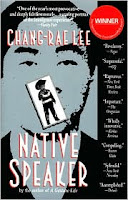
When my good friend, the late poet Andrés Montoya and I graduated from the University of Oregon, we were lucky enough to have jobs, maybe not as sweet of a deal as our classmate Chang Rae Lee got, a three year visiting professorship under Garret Hongo, but neither did we, like Chang Rae, get a big book deal from Riverhead. Native Speaker was bought up before he even graduated with his MFA.
Nor was I, quite frankly, I must admit (gulp)as good of a writer as he was.

Or I should say, we were different writers.

He wrote beautiful language-based fiction, quiet like a prayer, and I wrote shout-out-loud, in-your-face short stories about messed-up Chicanos who mess up themselves and others, who, when they try to love, end up punching everybody, stories with more passion than craft.

I got a job at Modesto Junior College (More about that place later) and Andrés got a job at Chabot College in Hayward.
We both taught composition, lots of classes of composition, which means we had piles and piles of papers to comment on and grade, hundreds of students each semester.

One of the reasons writers who graduate from MFA programs do not go on to publish even one book is all the papers they have to grade. I know so many great writers, people brilliant with words and images, writers as talented as any of the greats, but they never publish a book because they spend so much time teaching so many classes. They never write.

Writing, I tell my student, is not about talent. It’s about persistence. If you are driven enough to learn your craft, if you are willing to cheat your employer and when you’re supposed to be doing work at your desk you’re really reading or writing, you’ll publish a book.

Anyway, Andrés got a job teaching composition, including the Puente classes, at Chabot College.

So in 2009, on my book tour, when I had the opportunity to visit Chabot, I was very excited.

The last time I had been on that campus was when Andrés invited me to his Puente class to read one of my stories, which was called “Chicano Chicanery” and was about some Chicano university students who write “Fuck Shakespeare” all over the campus walls and hallways, as a means of protesting white cultural dominance.

I’m not sure if it was a good story, but Howard Junker liked it, and he ended up putting it in Zyzzyva, under a different title. When my first book came out, Chicano Chicanery, the New York editor hired by Arte Público didn’t like the story much. I guess she didn't think writing anti-Shakespeare messages was very funny, and she asked me to take it out of the book.

Anyway, years ago I read that story for Andrés’ Puente class, and they seemed to love it. Puente is a program at some California community colleges designed to assist under-represented Latino students to transfer to four year universities. In their English classes, they teach Chicano literature.

Maybe they liked my story so much because for the first time they were taking a literature class where they read stories and poems written not by dead white men, but by Chicanas and Chicanos like themselves.

After my reading in Andrés class--at a time I only dreamed of having a book published--some of the Puente students came up to the desk where I sat and asked me to sign their copies of the Fuck Shakespeare story, which Andrés had photo copied from a dot matrix print out.

Signing my name, I felt like a real writer, and I loved Puente so much that I would help start one at my own school, and I would become a Puente teacher .

Well, fast forward the camera of my life to now, and I’m on my book tour for Unending Rooms. I got an opportunity to go back to Chabot College for a big reading and book signing.

It was going to be a great event, open to the entire school, organized by Ramón Garcia, the Puente Counselor at Chabot, who has been fighting for justice since before Andrés and I were fighting for a place in line at the jungle gym.

It was going to be a great event: A former Puente teacher returns with four published books.

But I blew it.

I scheduled two events on different sides of the state, on the same day, at the same time.

I wrote to Ramón apologizing, and although he was disappointed, (he had made such beautiful fliers!) he was kind about it. He had to cancel the event, but he offered to let me come another day, the only day I had free, a Monday afternoon.

He said it was too late to get the awesome theater he had reserved for the event and to invite the entire college, but I could visit the Puente class.

I jumped at the opportunity, not only because it was what I had done years earlier in Andrés’ class, but also because I love the Puente Students.

They love literature. They love writing.

Early Monday morning, at about 6 am, Sasha , Kafka and I drove from Fresno, where we were staying with our good friend Lee Herrick, to Hayward.

We were met by Ramon himself, and after showing us around, we went to his office, where we reminisced about when Andrés was the Puente teacher, how one time he helped students organize a protest. It got pretty wild, and the cops showed up and tried to break it up. One of them pushed Andres out of the way, and Andrés, not a pushover, might have pushed back.

He was handcuffed and arrested in front of all his Latino Students, charged with assaulting a police officer and resisting arrest.

I remember he called me that night and told me about it, and I shook my head and said, “Ay, Andrés!”

Years later, Ramón showed us around campus, the places Andrés used to teach, his office, and then he bought us a cup of coffee.

We went to the class, and it was great.

Sasha, who held Kafka (you know he’s our puppy, right?), said it was the best reading I had ever done.


The students loved the stories. From Unending Rooms, I read “The Tree That Wouldn’t Leave Sara Alone” a children’s tale (maybe) about a big oak tree that falls in love with a little girl and follows her everywhere. She has to get an injunction.

I had only brought a few books to sell, thinking the students wouldn’t have enough money to buy them, but they lined up afterward and bought them all within ten minutes. I had to run back to the car for more.


I know it went so well because of them, the Puente students, and not because I’m so fantastic.

I don’t mean that in false humility.

The Puente students were great that day, and because of that fact, they saw greatness in me.

Who is a genius?

Those who find genius in everyone, everywhere, at anytime.


The Puente class was full of geniuses.

After they had all gone on to their next classes, Ramón took us to a small café downtown, that had outdoor seating, which we needed because we had Kafka with us.

We ate the best fish tacos I had ever had in my life, shark tacos, mahi mahi tacos, salmon tacos.

Kafka sat on the sidewalk, watching the people pass. Then he laid down and slept for a while.

Thursday, April 9, 2009

Live from Oregon!!!

I just arrived in Medford Oregon and then made my way to Ashland and am staying at this hotel.

It's one of those old boutique hotels, where the furniture is like from a Jean Paul Satre play about hell (2nd Empire Furniture) and the rooms are very small but not at all hellish.

It's nice.

I'm on the top floor looking out on the city where they have the great Shakespeare festival.

This morning I'm going to be on the radio for an hour talking about my novel, and the shadows took him, which is set here in Southern Oregon.

The Latino students at Southern Oregon State University invited me, and they are treating me very well. Check out the SOU Latino Student Union myspace profile and the poster they made for tonight's the event. Looks like a poster for a baile, no?


Last night they took me to dinner, about twenty students, at a restaurant that stayed open late just for us.

Even though my novel is set here, I haven't been here since before I wrote it. Check out this recent article about books set in this valley, including shadows.

It's so much bigger now, and there are a lot more raza then there used to be. Back when I used to come to Medford, there were few Mexicanos, mostly those who worked in the orchards, and mostly men, who came and went with the seasons. But now, there are everywhere. We are everywhere, even in the university, even giving a reading tonight.

These young people of the Latino Student Organization, are puro Latino, puro Mexicano, but they're also Oregonians, many of them having lived here most of their lives.

Oregon Chicanos, man!

You gotta love them.

¡Aztlán, Oregon!

¡Con Safos y que!